

Part two, in two minutes:
TLDR: Australians who renew their insurance pay about a third more than new customers for the same cover, and companies price that in because they know most of us won’t check. An AI agent doesn’t get tired of checking. I think that ends the loyalty tax.
The loyalty tax
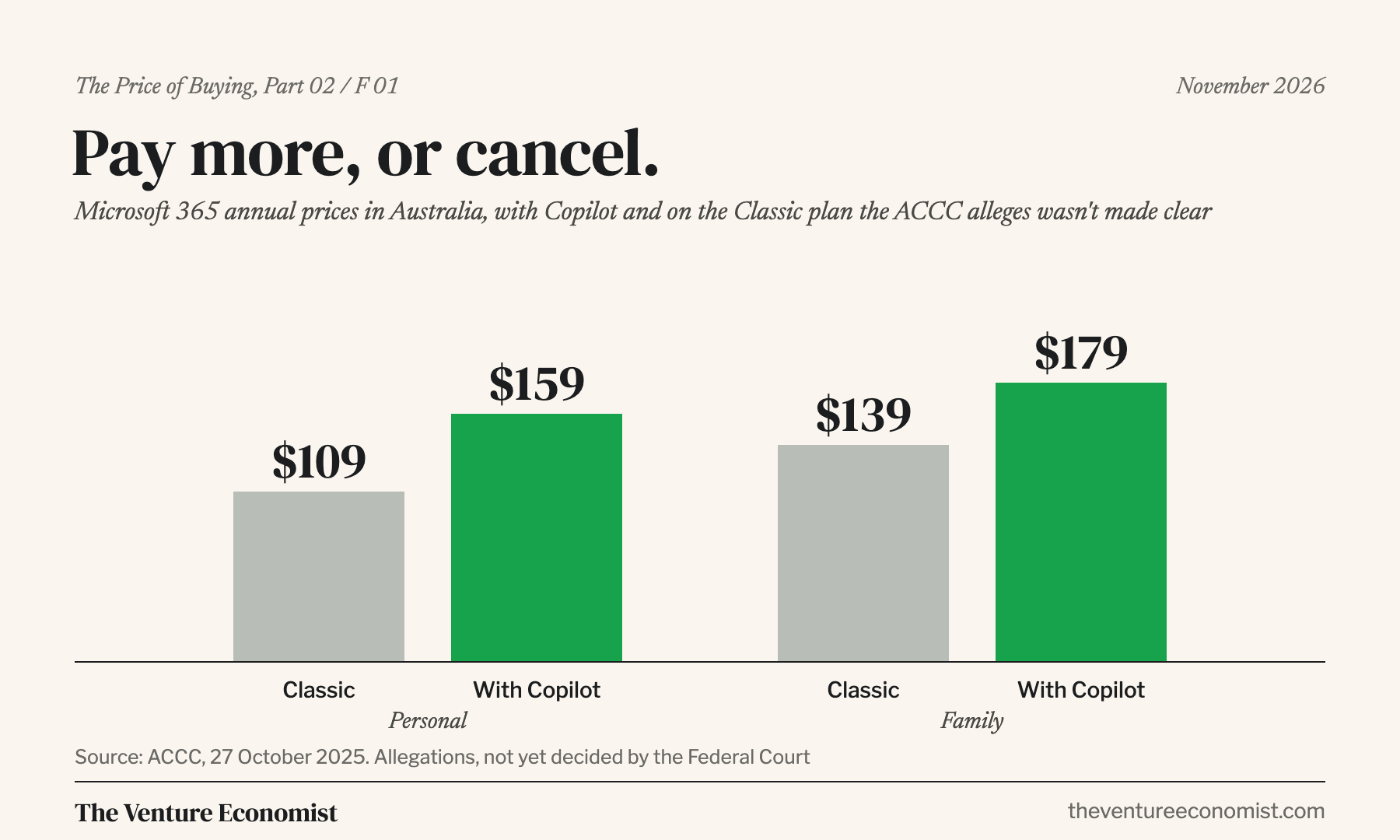
In October last year, the ACCC took Microsoft to the Federal Court. When Microsoft added its Copilot AI to the Microsoft 365 Personal and Family plans, the price of Personal went from $109 a year to $159, and Family from $139 to $179. The ACCC alleges that Microsoft told about 2.7 million Australian subscribers they could pay the higher price or cancel, without making clear that a third option existed: a "Classic" plan with everything they already had, at the old price. The case hasn’t been decided.
Whatever the court finds, the alleged plan relied on a fact most businesses know well. Most of us renew without checking.
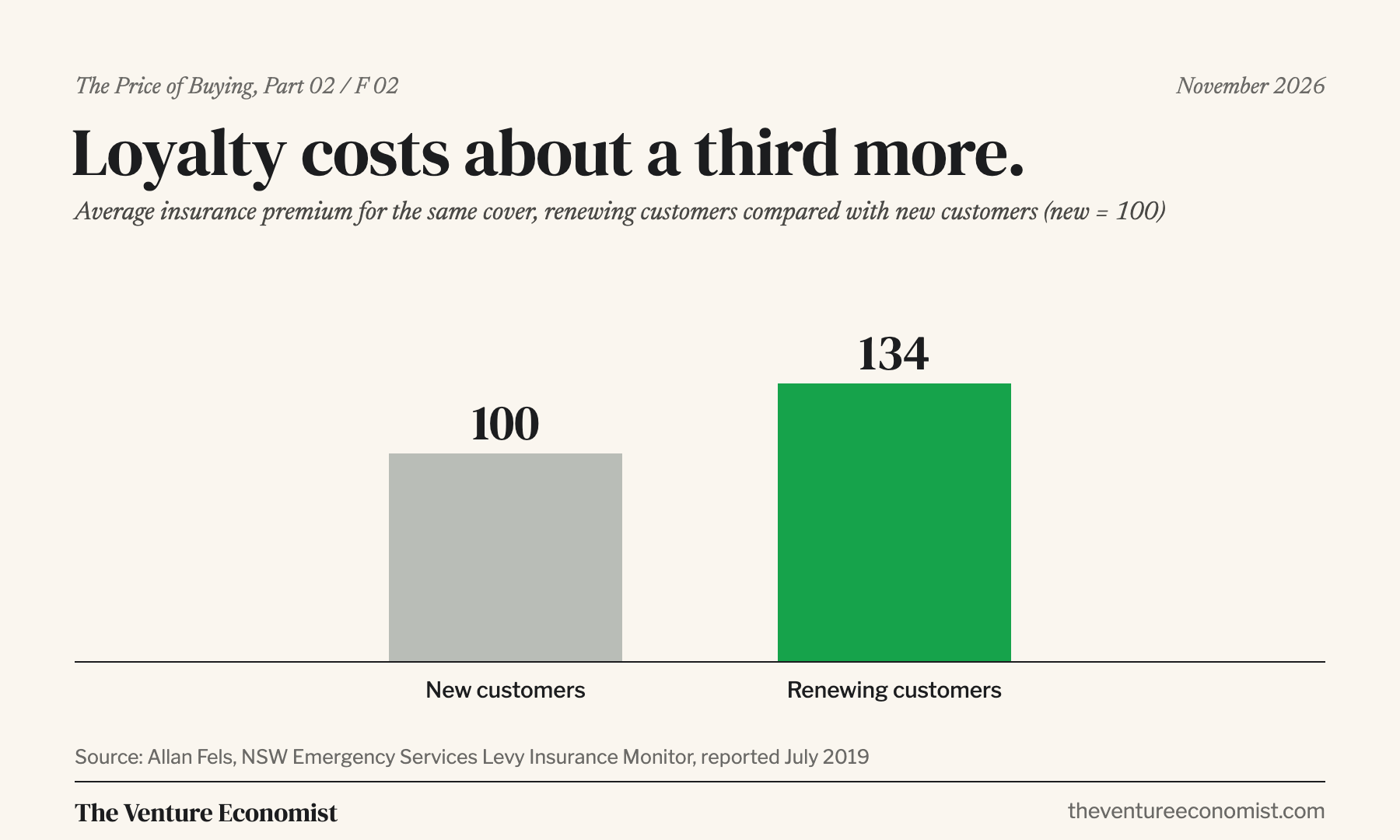
Insurance shows how much that is worth. When Allan Fels was the NSW Emergency Services Levy Insurance Monitor, his research found that people who renewed their insurance paid on average 34% more than new customers for the same cover. He called it a loyalty tax. Insurers disputed the figures, but the practice is familiar to anyone who has rung to cancel and been offered a better price on the spot.
Buyers get tired
Economists call this a search cost. In 1961, George Stigler published a short paper called "The Economics of Information", which asked a simple question: why does the same thing sell at different prices in the same market?
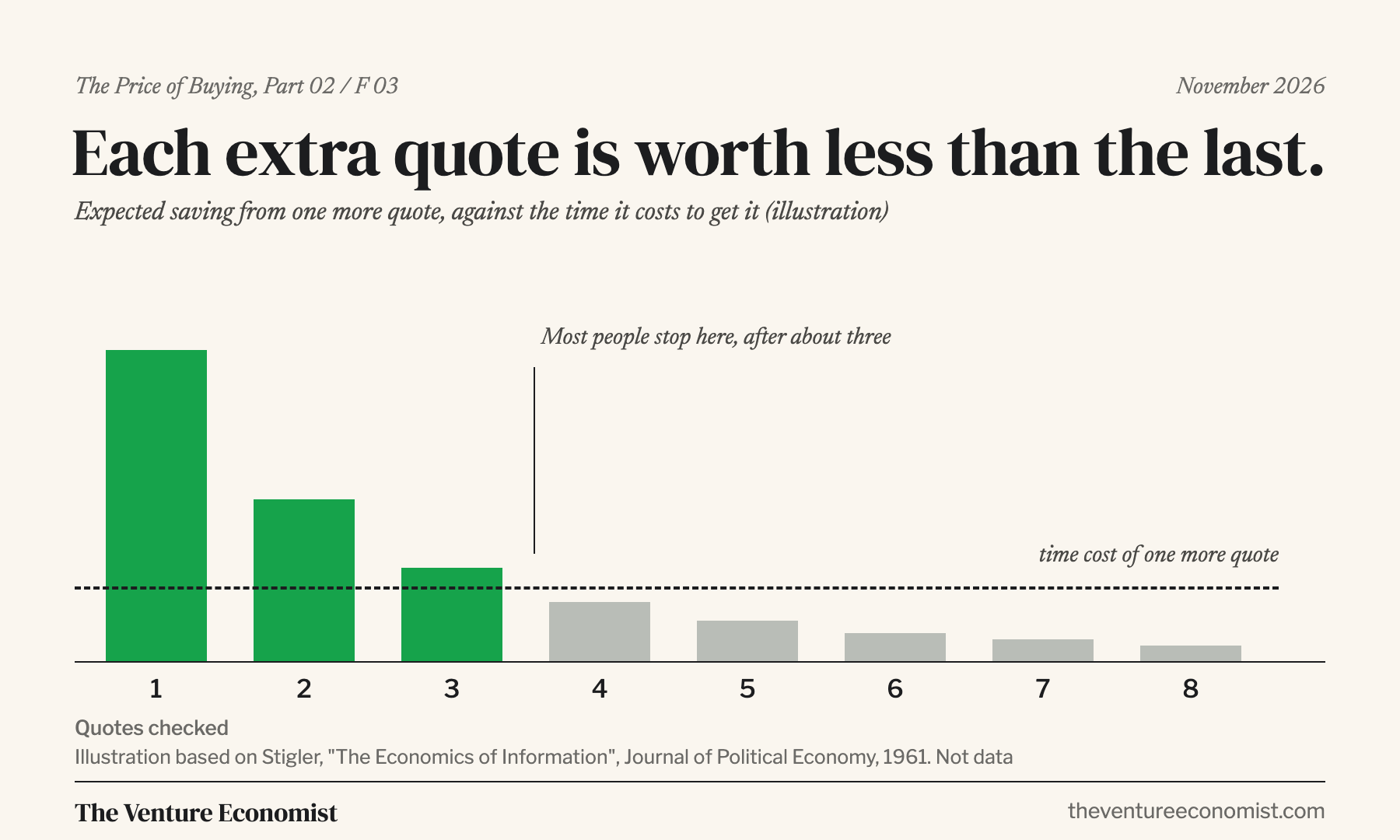
His answer was that finding the best price takes time and effort, and each extra quote is worth less than the one before. The first quote tells you a lot. The second tells you whether the first was reasonable. By the fifth or sixth, you are unlikely to save much more than the time it cost to ask. So people stop searching once the next quote costs more time than it is likely to save. That is why three quotes usually feels like enough, and why procurement rules so often ask for three.
Stigler’s point was that price differences aren’t a market failing. They are what you would expect in a market of people who get tired. Sellers know how far most buyers will look, and price accordingly. The loyal customer who renews without checking is not being foolish; for them, the search costs more than it saves. The business that charges them more has simply worked out where they stop.
A lot of the economy is built on that one fact.
Even the price tag comes from it
For most of history, almost everything was haggled. A price was something you arrived at, and a good buyer was one who had the time and nerve to push.
That changed in the big department stores of the late nineteenth century. In 1876, John Wanamaker opened his Grand Depot in a converted railway freight shed in Philadelphia, with goods on display and one price for everyone. He didn’t invent fixed pricing, but he is widely credited with the price tag itself. A store that size couldn’t train hundreds of clerks to haggle well, and its customers didn’t want to haggle over every reel of thread. A printed price saved time on both sides.
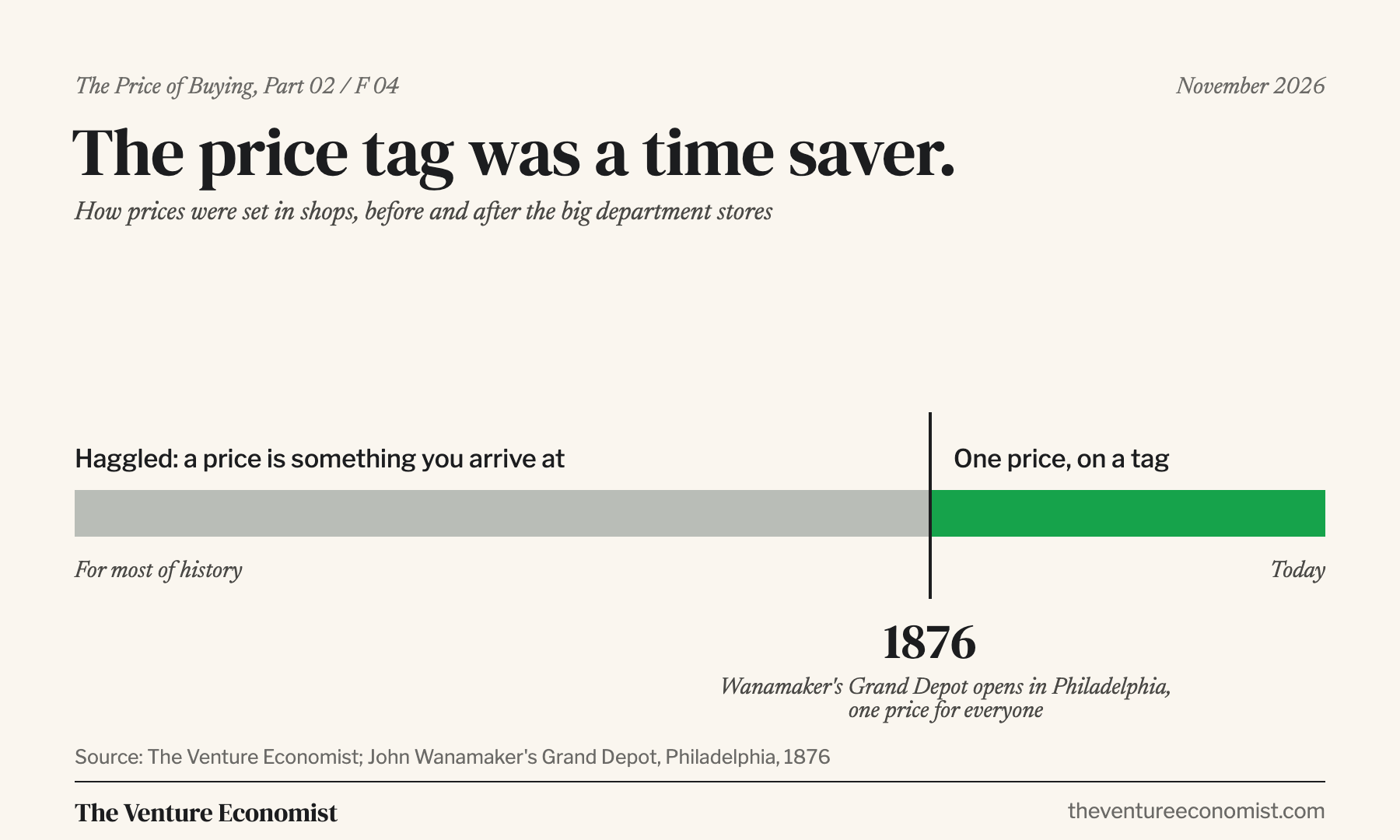
In other words, the price tag is a solution to tired buyers and busy sellers. It traded a better deal for a faster one, and almost everyone accepted the trade. We still do. Most of what we buy, we buy at the price on the label, and most of the prices we pay for services are set on the assumption that we won’t go looking for better.
An AI agent doesn’t get tired
Now put a buyer into that economy who never gets tired.
An AI agent acting for you can check every plan at every renewal. It can get thirty quotes instead of three, because the thirtieth costs it almost nothing. It can haggle over every order, politely and at length, without minding. Walmart’s already does, as I wrote in part one: its bot now negotiates supplier contracts that used to roll over untouched.
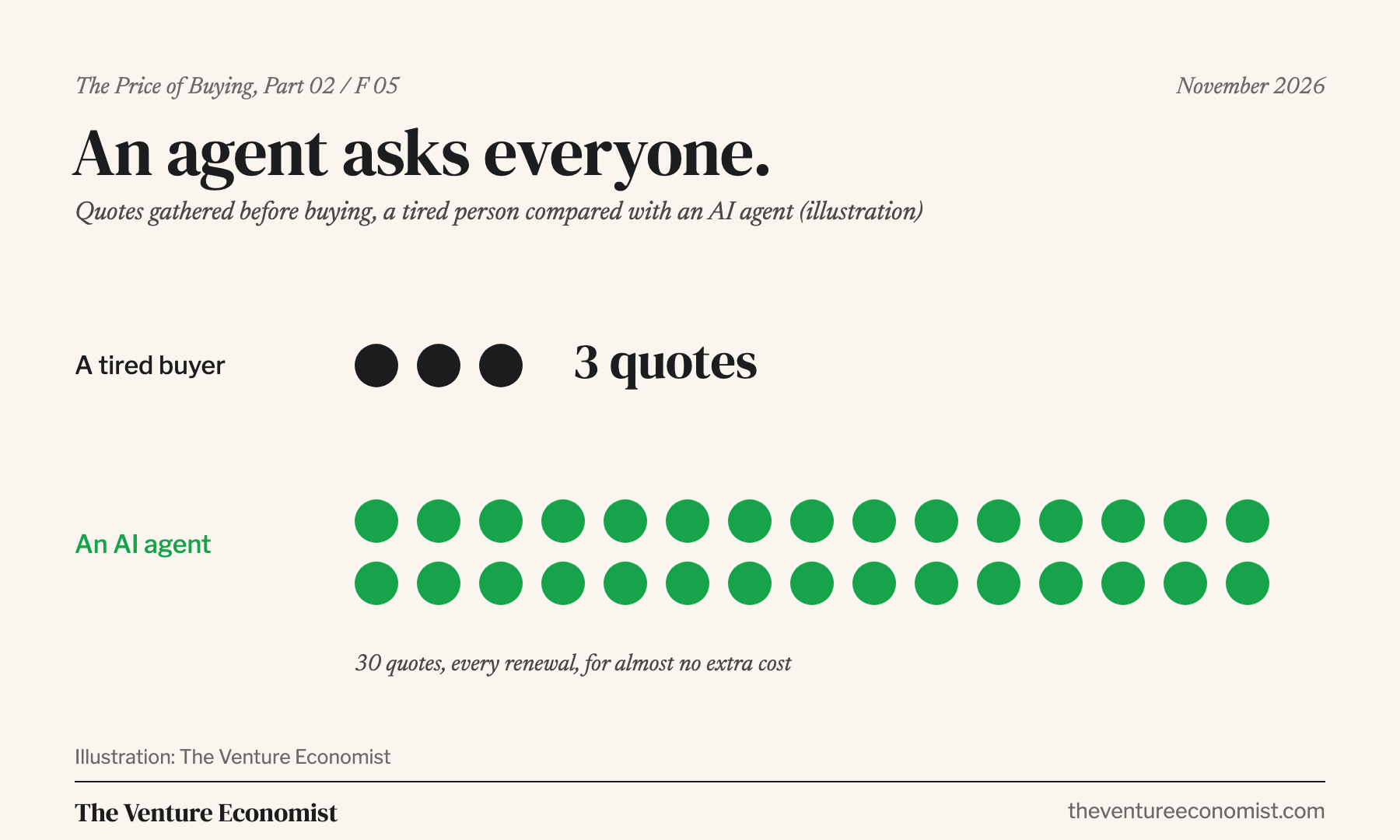
Stigler’s logic still holds. People stop searching when the next quote costs more than it saves. What changes is the cost. When searching costs almost nothing, the point where the buyer stops moves a long way out, and every price set on the assumption that buyers stop early is exposed.
I think that is the end of the loyalty tax, and of every price that relies on us giving up. The renewal price that is a third higher than the new-customer price only works if nobody checks. The "cancel or pay more" email only works if nobody finds the third option. An agent checks, and finds it.
This cuts both ways. Businesses that earn their margin from inattention will lose it. Businesses that are simply good value, with clear prices and a record anyone can check, will be found more often, because the agent looks further than any person would. And it raises new questions, which later parts of this series take on: what happens to sellers’ pricing when the buyers are machines, and who wins when every buyer can see every price?
When searching costs nothing, the price you pay stops depending on how hard you looked.
The Price of Buying is a video series first. Next episode: if the buyer is a machine, what happens to advertising? Subscribe on YouTube so you don’t miss it.
Which renewal do you never check: insurance, energy or your phone plan? Tell me in the comments.
Sources
ACCC, "Microsoft in court for allegedly misleading millions of Australians over Microsoft 365 subscriptions", 27 October 2025 (allegations, not yet decided)
Insurance News, "Insurance loyalty tax rises to 34%, says Fels", 22 July 2019
Stigler, "The Economics of Information", Journal of Political Economy, vol. 69, no. 3, 1961
John Wanamaker, Wikipedia
Bloomberg, "Walmart Is Using AI to Negotiate the Best Price With Some Vendors", 26 April 2023
George J. Stigler photo in the video: University of Chicago Photographic Archive