
Last week, Apple did something it almost never does. It raised prices across the Mac and iPad lines in the middle of a cycle, with no new hardware to show for it, and put the blame on artificial intelligence. The MacBook Air that started at 1,099 dollars now starts at 1,299. Not one of those extra dollars buys an AI feature. Apple simply could no longer absorb the cost of memory, and memory has become expensive because of AI.
That is a complementary good behaving exactly as the textbook says it will. It is also the most useful thing the economics of AI can teach you about your own career.
What is a complementary good?
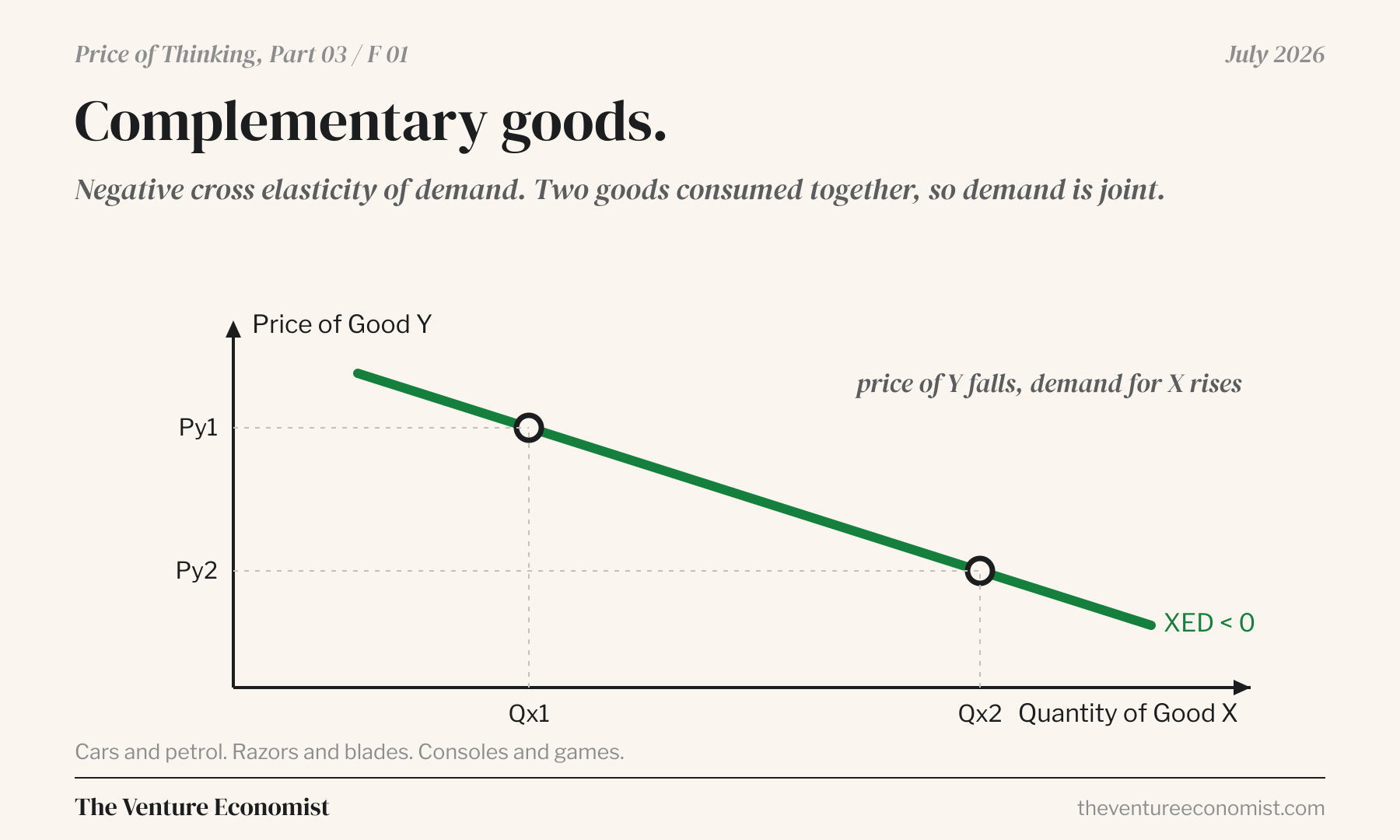
Earlier in this series we covered the substitute, a good that can be used in place of another. A complementary good is the mirror image. It is a good consumed together with another, so demand for one lifts demand for the other. Just like AI and memory. Formally, complements display negative cross elasticity of demand, which means that when the price of one falls, demand for the other rises.
The substitute and the complement are the two relationships a good can have with another, and they pull in opposite directions. A substitute takes demand away. A complement adds it.
Why AI is making memory more expensive
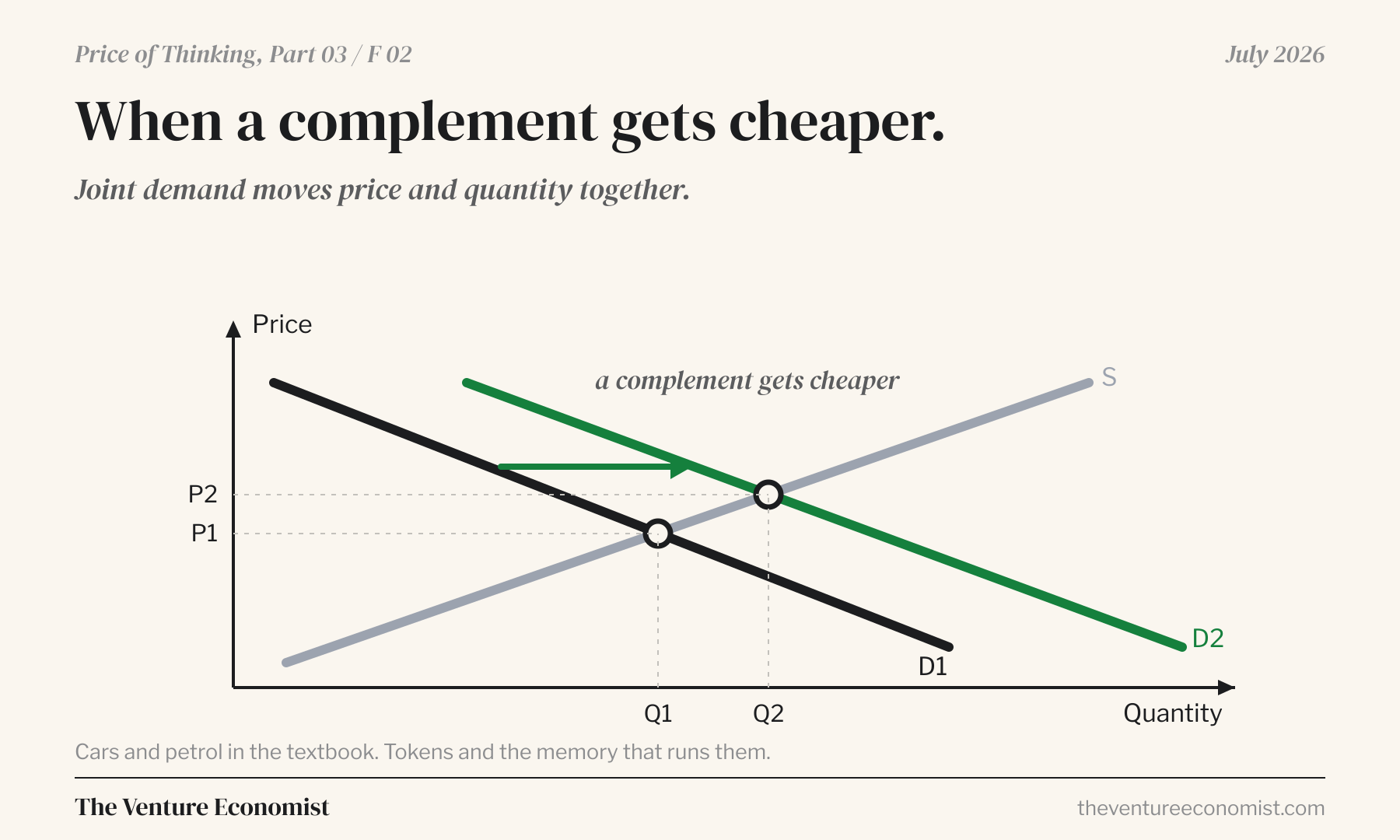
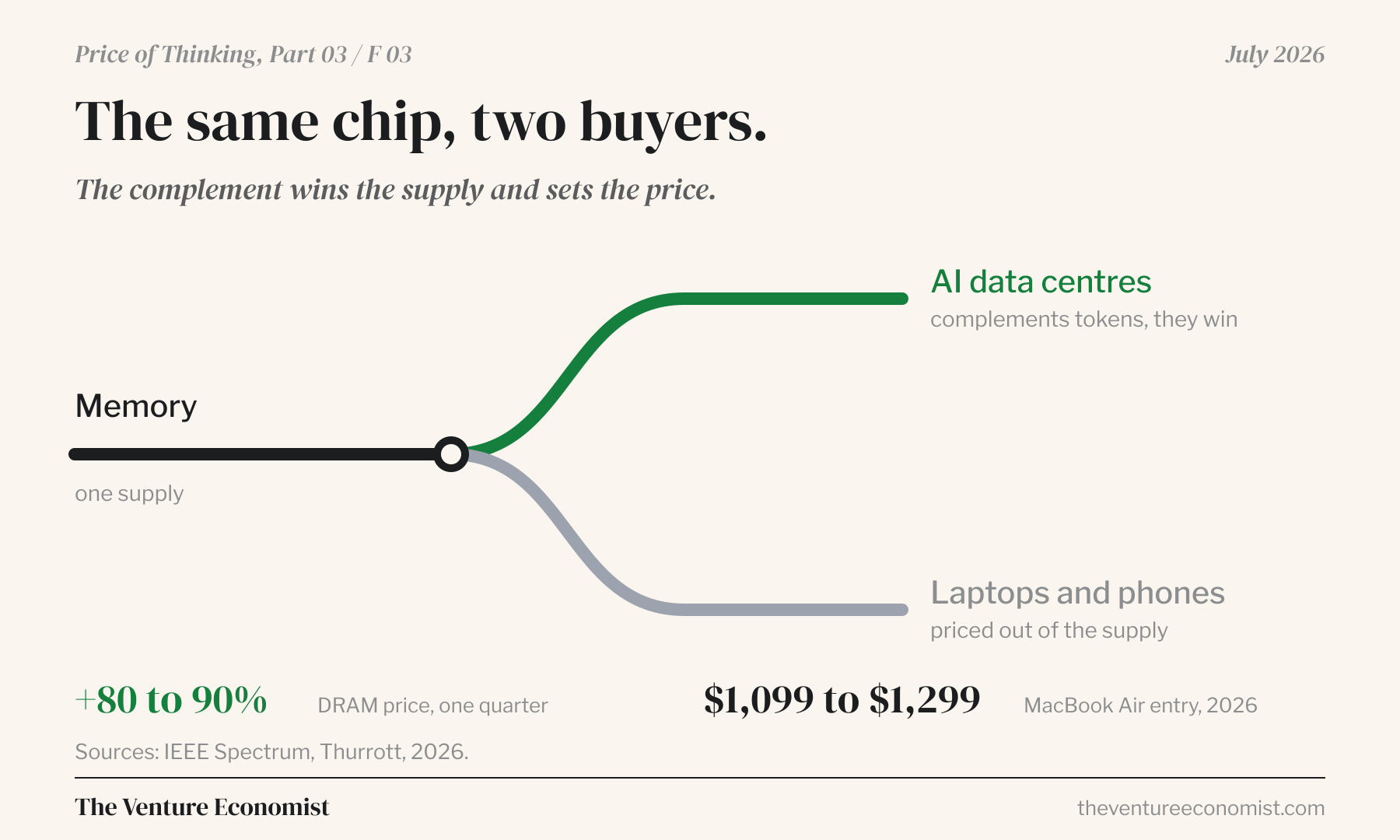
An AI model runs on memory. Every token a data centre generates is produced on banks of high-bandwidth memory, so tokens and memory are complements in the strictest sense. As the demand for tokens has exploded, the demand for memory has gone with it, and the price has followed. DRAM prices rose by roughly 80 to 90 percent in a single quarter, and the AI hyperscalers, the Microsofts and Googles and Metas, are buying the supply at the front of the queue. That leaves the makers of laptops and phones to compete for what is left, at the price the complementary buyer has set.
This is why your next laptop costs more. The memory in it is the same memory an AI data centre wants, and the data centre got there first.
The squeeze falls on everyone who is not the complement
Here is the part worth sitting with. If you are buying memory because it complements tokens, you can pay the higher price, because the memory is earning its keep inside a far larger machine. If you are buying memory because you want a laptop, you simply pay more, or you go without. The complementary use case sets the price, and the ordinary buyer wears it.
When a good becomes complementary to something in enormous demand, its price is set by that demand, and everyone outside the complement is left competing on terms they did not choose.
The complement you have not yet priced in is your own work
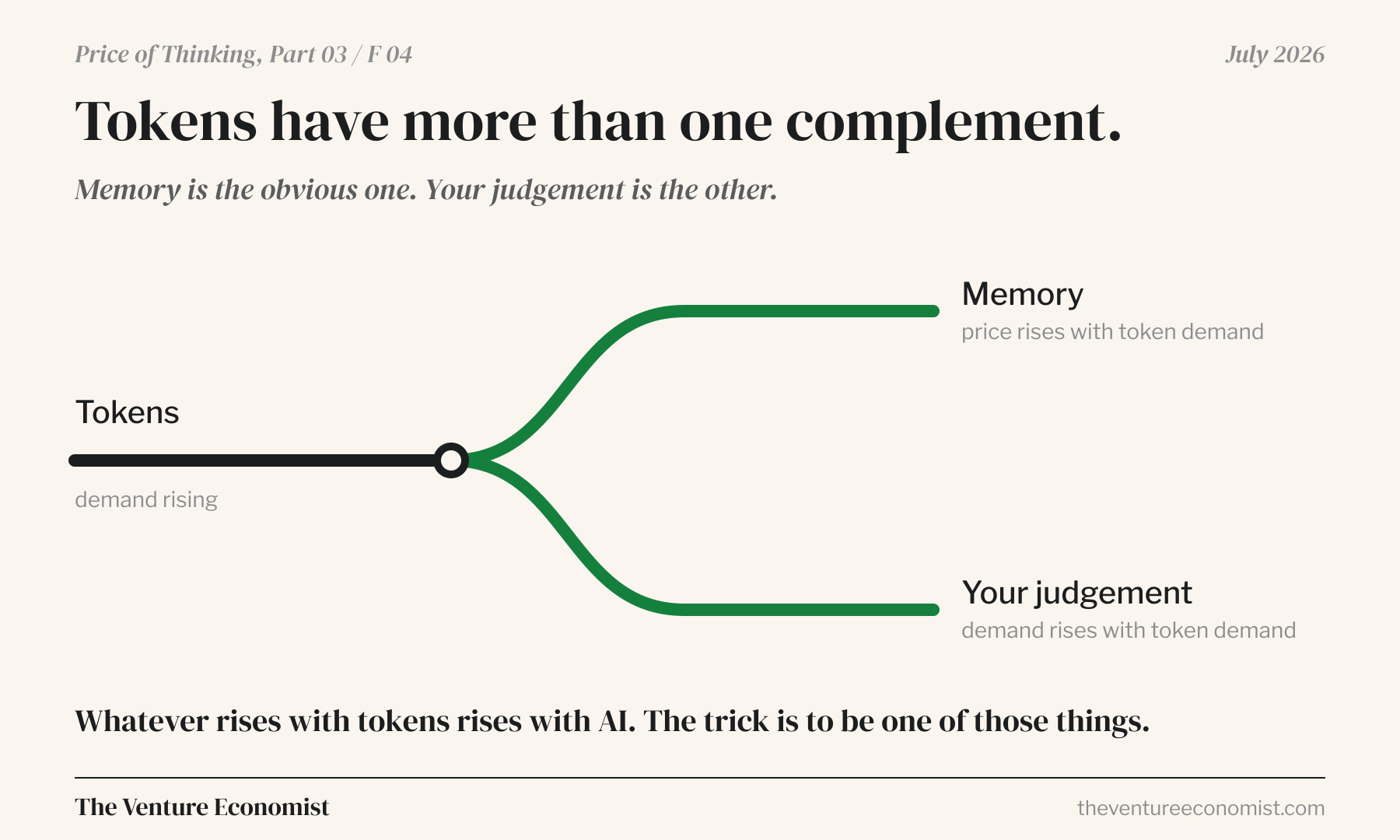
Memory is not the only thing complementary to tokens. Human judgement is too. Every token a firm generates still needs a person to decide what to ask for, to tell whether the answer is any good, and to carry the consequences on execution. The more tokens a business runs, the more it needs that judgement, which makes a certain kind of human work a complement to AI in exactly the way memory is. As demand for tokens rises, demand for that work rises with it.
The big question: Do you feel busier because of AI?
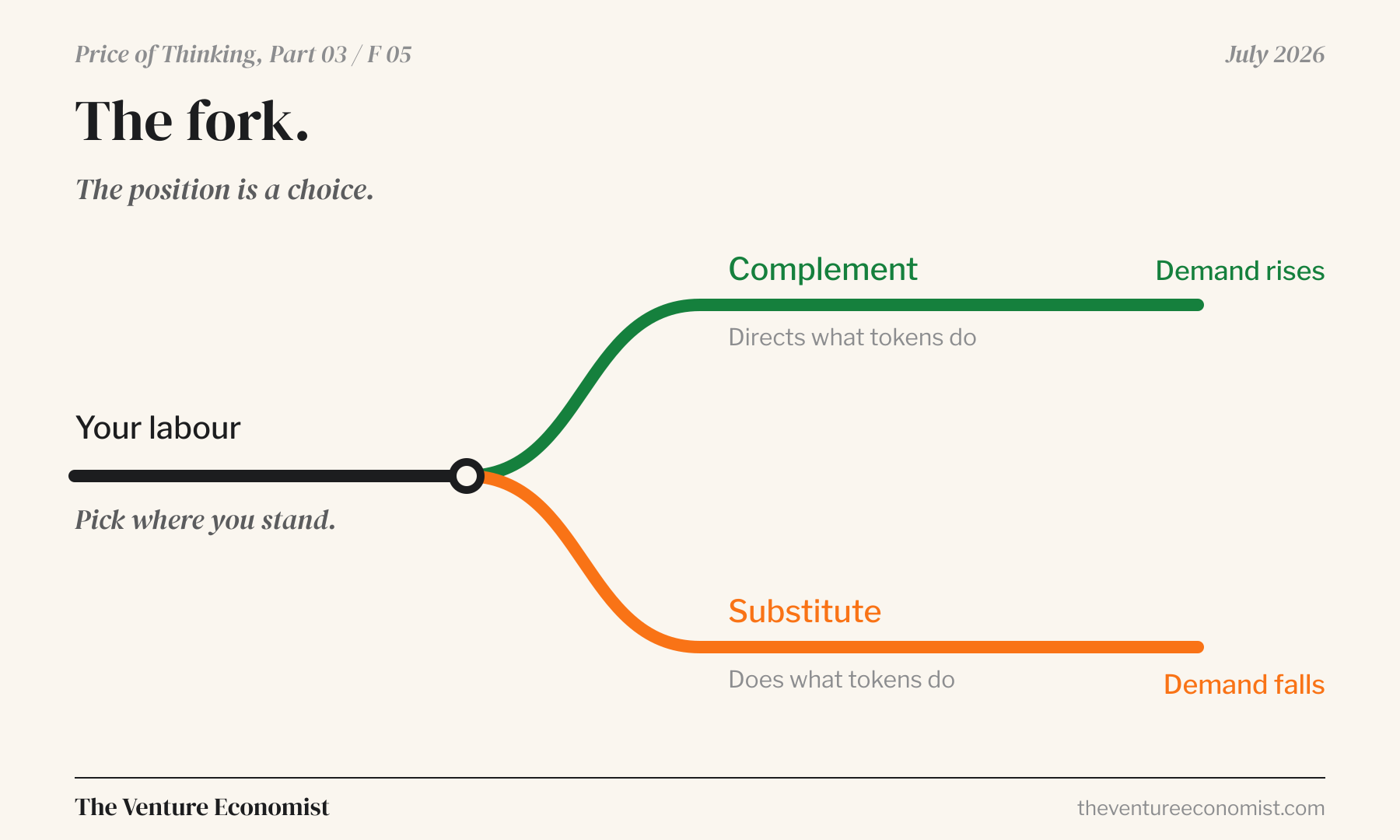
This gives you a simple test. If AI has made you busier than you have ever been, you are most likely operating as a complement, and demand for what you do is rising alongside demand for tokens. If AI has made you feel surplus, the work quietly draining away from you, you are most likely a substitute, and the demand is flowing past you to the people who direct the machine rather than compete with it.
The position is not fixed, and that is the optimistic part. The same technology that takes demand away on the substitute side adds it on the complement side. You have some say over which side of that line your work sits on. Memory had no choice about becoming valuable. You do.